Sail Racing Magazine – sailracingmagazine.com –
 In the latest of our insights into the four 34th America’s Cup teams we take a look at the role of the grinding teams who provide the raw power required to get the boats around the course.
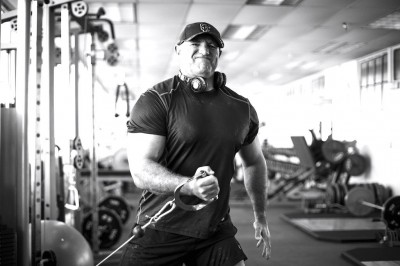
Sail Racing Magazine editor Justin Chisholm sat down with Artemis Racing’s core grinding unit, Craig Monk, Chris Brittle and Magnus Augustson to find out more about this critical and demanding role.
SRM: You guys are the core Artemis Racing grinding team, but like all the 34th America’s Cup teams, virtually everyone on the boat is a grinder at some point?
Craig Monk: [Laughing] Yes. It seems everyone has taken an interest in grinding now. Finally the grinders have risen to the top of the sport and we are running the ship.
Chris Brittle: We are obviously the biggest guys and you need the core grinders for the power, but we also have to be able to control the winches in terms of what is being ground at what point. The other guys join in to help but they also are doing their other jobs too so they are coming in and out all the time.
SRM: What are the main differences in being a grinder on an AC72 compared to the monohulls of old?
Craig Monk: There are many. Today, it is so totally different that sailing these boats is almost a different sport.
In the old days, you didn’t move on the boat, other than to go up and down – you didn’t really even move laterally on the boat. Now, it is vital that you have a feel for the boat as well.
In the old days you needed to be explosive, you could be physically heavier, and of course the races went for two hours or more.
SRM: Tell us about the decision making requirements on you as grinders?
Chris Brittle: Well there are a lot of them on our boat! We have to do more than the other teams at the moment because we have runners and because of the particular way our boards work.
We started out with boards that you can adjust the cant, as well as moving them up and down. Then we have runners, plus you have the wing and the jib and the trimming of the Zero. So, all in all, it is definitely a tough boat to sail.
Craig Monk: We have a busy boat. It’s been a good training vessel, because it means we have been doing twice as much grinding as anyone else. We are looking forward to getting it all back to level again.
SRM: Describe a typical sailing day for the grinding team?
Magnus Augustson: The day starts at the base around seven thirty when the sailors go to the gym and the shore crew prepare the boat. The gym lasts until about nine when we have breakfast.
By then the boat is out of the shed, wing on and in the water. Then it depends on the wind as to when we go sailing – some times it is after lunch before the breeze kicks in.
Over the winter we have been sailing until it is more or less dark. Once we are back ashore, it’s wing down and we help wash the boat down to get it as quickly as possible back into the shed.
Of course, that is when the day starts again for the shore crew to prepare the boat again for the next day. That could be anything from an hour up to on some occasions the whole night. Sometimes, if there are issues to do with the winches, we will try to help the shore crew to help out with that.
SRM: Those sound like long, tough days – do you just fall into bed each night exhausted?
Chris Brittle: We are certainly fatigued at the end of a day on the water, but the team monitors us quite closely. We use a device each day which fits on your finger and checks your heart rate and we each fill out a online form in the morning about how fatigued you are feeling. All that data is fed automatically into a central system.
Craig Monk: I’m always surprised when we get through a day. From when the boat gets launched to when it is pulled out of the water and put away, there is a lot of work for us.
You have got to really look after your body and know what your body is telling you. In the old days you could kind of thrash it a bit and get by in a race, but now any niggle turns into a major issue pretty quickly so you have to nip it pretty fast.
SRM: Another big difference between the grinders of old and the modern day ones is the requirement to be agile and to be able to move quickly around the boat. How does your training address that?
Chris Brittle: It’s something we know we need to do more on, but up until now we have been focused on the strength and fitness aspect.
On our boat, when we run to the central grinding pod, it’s at a steep angle from the beams. The other problem is that when you are doing that, the movement of the boat is really quite violent.
Often it is hard to predict where which way you will get thrown. There’s not a lot you can do to make it better, other than trying to run a bit lower and trying to stay stable.
SRM: How would equate the physical demands of being a grinder on an AC72 to a mainstream sport?
Chris Brittle: I think the comparison with Rugby forwards is a good one. I played a bit at university and I remember you had to run to every breakdown, which is aerobic, and then you had to use your power to drive over, and then you had to run again. I think, for me, it is a very similar comparison for what we are having to do on the AC72.
SRM: Can you describe just how noisy is it onboard the boat and how you manage to communicate? Are you using headsets?
Magnus Augustson: It gets really noisy, particularly when you are doing 20 knots upwind. Headsets can be useful to hear from the helmsman about the next manoeuvre, but they can make it harder to communicate with each other.
Craig Monk: It’s like sticking your head out of a car window at 60 miles an hour and trying to have a conversation.
Chris Brittle: Yes, it’s really noisy and communication is hard. Rather than headsets, we actually prefer just to shout to each other and use eye contact.
SRM: It sounds like bedlam – how do you manage to coordinate everything between you?
Craig Monk: You just have to back each other really hard and know all the manoeuvres inside out. You also have to trust that you will get dropped into a winch at the right time or split out at the right time. We all have to know all the possible combinations for all the manoeuvres.
You operate a pedestal each and you are in charge of your buttons. Normally the extra person will come in on the front so that we are always pushing and looking forward. Generally they are jumping in from another job and don’t know which winch we are grinding. They very much have to trust us to let them know which way we are grinding and what gear we are in and that sort of stuff.
You have to remember that most of them are brand new to this sort of thing and we have been doing it for twenty years. The winches are complicated, with eight gears, so its hard unless you are used to them to know which gear you are in or which button to pop.
SRM: Understandably, there has so far been a media focus on the technology and in particular the foiling aspect, but crew work and boat handling is potentially going to be equally important when racing starts. How different do you expect racing the AC72s will be to training?
Chris Brittle: We have not done any full on racing yet and that’s where things can go wrong.
When you are training, you can say 30 seconds to gybe and it’s all fine. The difficulty comes when you are racing and you are just short of the layline and so you have to come in hot – and then throw another boat in the mix. That’s when you have to trust the experience of your teammates around you.
Craig Monk: It’s all about trust and the team. One person alone can do absolutely nothing on these boats – pretty much everything is an eight person minimum manoeuvre. In the old days, two people could do something – and comparatively you had all day to do it.
SRM: Can you help us understand just how tough life is going to be for the grinders when you are racing on the tight confines of an America’s Cup course in San Francisco?
Craig Monk: Travelling so fast, everything happens so quickly, so we don’t think you will ever get to final trim on the sheet on these courses.
There is a lot of grinding involved all the time and you have to remember that you don’t get all eight people on the pumps at the same time as they have other jobs that mean they are coming in and out to help us.
I think that, after a gybe say, by the time we are able to get final trim at max speed we will be doing another manoeuvre. So for us a race could be 40 minutes of constant grinding.
That’s why it’s important that as a grinder you have a good awareness of where you are on the racecourse. In the past it didn’t really matter, you just ground. Now when all of the stuff on the boat is going on you still have to know where you are on the racetrack.
I don’t think we will ever see the other boat – to a point, I don’t think we will know who we are racing. That sounds strange, but it’s just that everything is happening so quickly. That means you have to rely on your sailing background to help you focus on what you are trying to achieve during each part of the race.
Look out for a separate interview with the Artemis Racing exercise physiologist Pete Cunningham in the March issue of the Sail Racing Magazine iPad edition, out soon.
Image credit: Sander van der Borch/Artemis Racing
The post 34th America’s Cup interview – Return of the Grinders: Artemis Racing’s core grinding crew appeared first on Sail Racing Magazine.